
The McFletcher Corporation
WorkStyle Patterns® Inventories — Profile Comparisons


|
|||||||||||||||||||||||||||||||||||||||||||||||||||
|
Comparing Your Preferred and Position Actual Profiles and Interpreting Your WorkStyle Stress |
||||||||||||||||
 |
Compare the Profile description to your Preferred Profile, particularly the "Contribution to Organization." In what ways does your Preferred Profile complement the Position Actual Profile and what ways do the two Profiles conflict? |
|||||||||||||||
|
We suggest you print these descriptions and highlight or underline 3 or 4 words or phrases that most reflect your preference and your work. Then compare for similarities and differences between each. |
|||||||||||||||
|
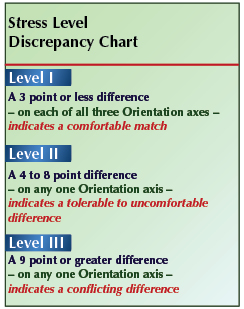
The difference between Preference and Position Actual Profiles can also be expressed in point differences. The discrepancy scores you calculated earlier represent this difference, which can be further translated into WorkStyle Stress. |
|||||||||||||||
|
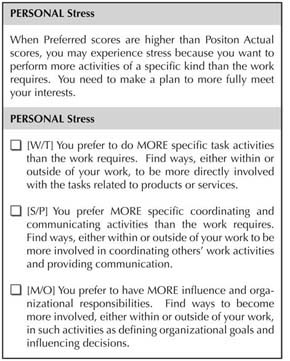
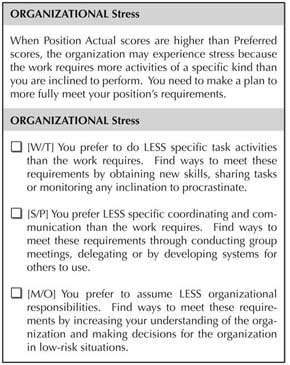
Look at the discrepancy difference for each Orientation on your WSP™ graph. Use the check boxes below to determine, by Orientation, how you might experience personal and organizational stress. |
|||||||||||||||
|
||||||||||||||||
|
WorkStyle Stress is very common in today's workplace. This represents a discrepancy between your Preferred WorkStyle and your Position Actual WorkStyle that can produce various degrees of stress. This may be manifested in a variety of ways. Typical personal responses include:
|
|||||||||||||||
|
Other forms of organizational stress can be observed through misunderstandings of work expectations, product quality and customer service problems, missed deadlines and higher turnover. |
||||||||||||||||
|
|
||||||||||||||||
|
Proceed to your final Step 7 to finish your WorkStyle Patterns Individual Inventory experience. There are a few suggestions for you to consider to maximize your preference while also meeting the needs of your work. |
|||||||||||||||
|
||||||||||||||||




McFletcher Home | Contact Us | Privacy Policy | Terms of Use